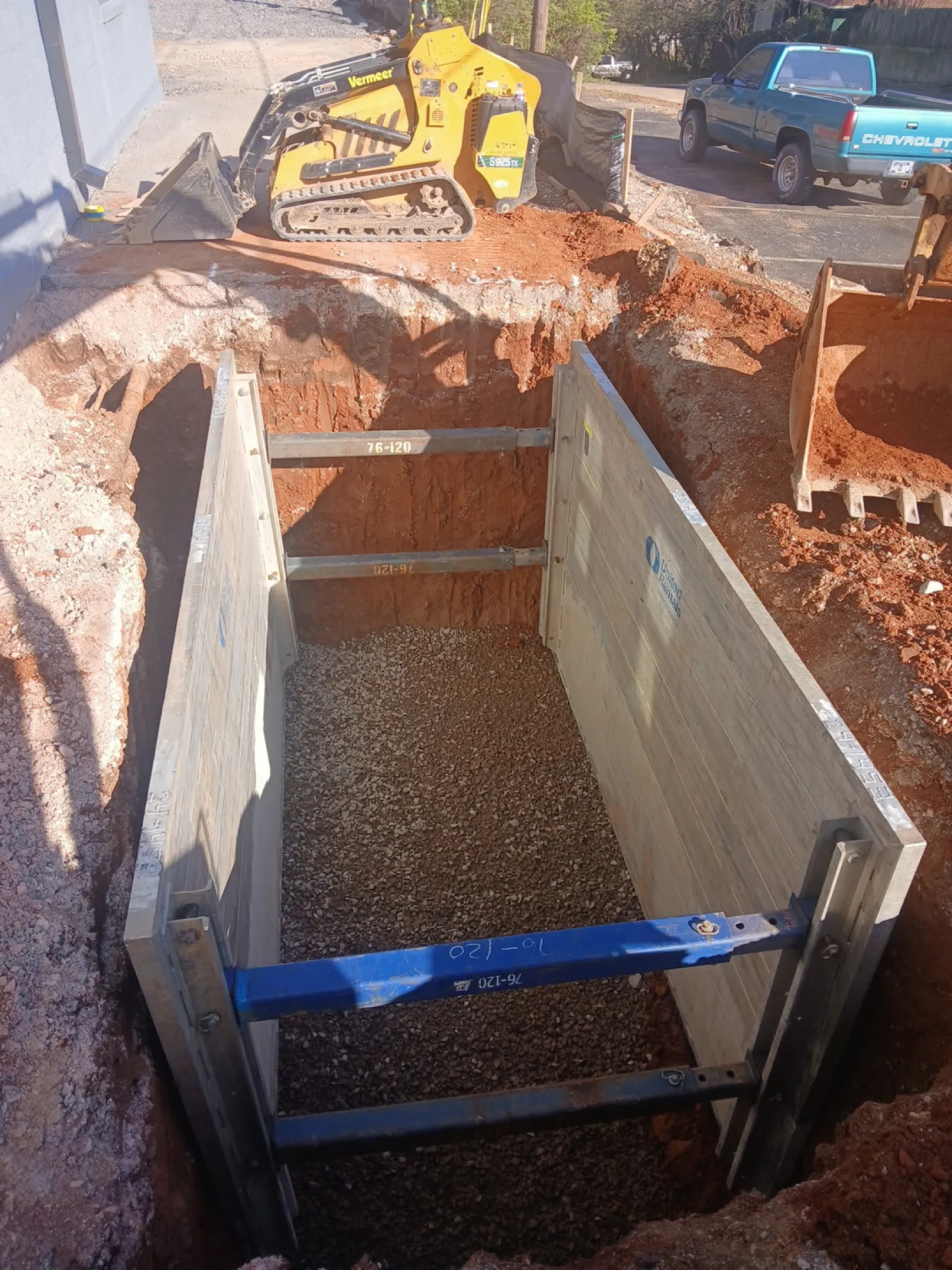
Assess Your Site and Soil Conditions Before Breaking Ground
Before you begin any excavation work, understanding your property’s unique characteristics is critical to success. Start by walking your entire project area and documenting existing features: slopes, low spots where water collects, existing vegetation, and any signs of erosion or previous disturbance.
In the Sevierville area and throughout the Smoky Mountain foothills, you’ll typically encounter dense clay soils mixed with rocky substrata. Clay retains water and can become exceptionally difficult to work when saturated, particularly during spring months when East Tennessee sees its heaviest rainfall. If you notice water pooling after recent storms, that tells you something important about your drainage needs and excavation timing.
Test your soil in multiple locations across the project area. Dig down 18 to 24 inches with a post-hole digger or spade. Note the soil composition at different depths: how much clay versus topsoil, whether you hit bedrock or large stones, and how the soil texture changes as you go deeper. Rocky terrain is common here, and hitting unexpected ledge rock can derail a DIY project quickly.
Document everything with photos and simple sketches. Mark areas of concern with flags or spray paint. If you encounter significant rock, unstable slopes steeper than 3:1 ratio, or extensive water issues, professional site assessment becomes necessary. Complex soil conditions require specialized equipment and technical knowledge to excavate safely and effectively.
Mark All Utilities and Establish Clear Safety Boundaries
Locating underground utilities is not optional; it is legally required and potentially life-saving. In Tennessee, you must contact 811 at least three full business days before any digging project. This free service coordinates with utility companies to mark the approximate location of underground electric, gas, water, sewer, telecommunications, and cable lines.
Utility companies will mark public lines that run to your property, typically up to your meter or service connection point. However, private lines beyond that point, such as irrigation systems, landscape lighting, septic lines, or buried propane tanks, are your responsibility to locate. Review your property records, talk to previous owners if possible, and trace visible features like hose bibs or light fixtures back to potential buried lines.
Mark all utility locations clearly with flags and spray paint. Add a buffer zone of at least three feet on either side of marked utilities. Never assume the marks are perfectly accurate; they indicate approximate locations. If you must dig near utilities, hand-dig carefully in those areas rather than using mechanical equipment.
Establish your property boundaries with certainty. Review your survey plat, locate property pins or markers, and respect setback requirements. Excavating onto a neighbor’s property or too close to boundary lines creates legal liability and complicates your project. If boundaries are unclear, hire a surveyor before proceeding. The cost of clarification is minimal compared to the cost of mistakes.
Plan Your Grading and Drainage Layout Strategically
Proper grading is the foundation of a successful excavation project. Water must move away from structures, not toward them. The basic principle is simple: ground should slope away from your home, garage, or other buildings at a minimum grade of two percent, which equals about 2.5 inches of drop for every ten feet of horizontal distance.
In the Sevierville region, where seasonal storms can deliver intense rainfall and the rolling topography creates natural drainage channels, getting the grading right is particularly important. During spring and late fall, saturated ground and rapid runoff can cause significant erosion if water is not directed properly. Study how water moves across your property during heavy rain before you begin excavation. Where does it flow naturally? Where does it pool? These observations guide your grading plan.
Identify your drainage outlets. Water must go somewhere. If your property drains to the street, a drainage easement, or a natural swale, plan your grades to direct flow to those exit points. Avoid grading in ways that concentrate water onto neighboring properties; this creates liability and potential legal disputes.
Sketch a simple grading plan that shows existing and proposed contours, drainage directions, and any swales or drainage structures you will create. Use stakes and string lines to visualize the finished grades in three dimensions before excavation begins. If your project involves complex terrain, steep slopes, retaining walls, or significant water management challenges, professional grading services bring the precision and technical knowledge needed for long-term success.
Prepare the Work Area and Manage Site Logistics Effectively
Once you have assessed your site, marked utilities, and planned your grading, the next step is preparing the physical work area. Remove debris, vegetation, and obstacles from the excavation zone. Clear brush, rocks, old landscaping materials, and anything else that will interfere with equipment access or digging operations. Store or dispose of debris properly; many Tennessee counties have specific regulations for yard waste and construction debris disposal.
Consider equipment access carefully. If you plan to bring in a skid steer, mini excavator, or other machinery, map the route from the street to the work area. Measure gate widths, overhead clearances, and turning radii. Protect driveways, walkways, and landscaping along the access route with plywood or ground protection mats if necessary. Equipment is heavy and can cause costly damage to hardscapes and turf if access is not planned properly.
Check local permit requirements with Sevier County or your municipality. Some excavation projects require permits, particularly if they involve grading changes, retaining walls, or work near drainage easements. Permit processes take time, so apply early. Operating without required permits can result in stop-work orders, fines, and requirements to restore the site to original conditions.
Communicate with neighbors, especially if your work will involve noise, equipment traffic, or temporary disruptions. A simple courtesy conversation prevents complaints and maintains good relationships. Establish a realistic timeline and set expectations for how long the work will take. DIY preparation can proceed at your own pace, but once excavation begins, momentum matters. Understand where your DIY work ends and where professional execution must begin to keep the project moving efficiently.
Recognize When to Bring in Professional Excavation Services
DIY preparation can save money and give you control over the early planning phases, but excavation itself is a different matter. There is a clear line between preparation and execution, and knowing where that line falls protects your investment, your property, and your safety.
Professional excavation becomes necessary when your project involves significant earth moving, precise grading, rock removal, deep digging, or work near utilities and structures. Heavy equipment requires training, skill, and insurance. Operating a backhoe or excavator without experience can result in property damage, utility strikes, injuries, or grading mistakes that cost far more to fix than hiring professionals in the first place.
Soil conditions matter. If your site assessment revealed bedrock, unstable soils, high water tables, or complex drainage issues, professionals bring the technical knowledge and specialized equipment to handle those challenges safely. Similarly, if your project involves foundations, septic systems, retaining walls, or underground utilities, precision and accountability are critical.
American Excavating & Hauling provides the full range of excavation and grading services needed to take your project from planning to completion. Whether you need lot clearing, foundation excavation, debris removal, or precise grading and drainage solutions, the team brings the equipment, experience, and professionalism to deliver quality results. Licensed, insured, and familiar with local soil conditions and building requirements throughout the Sevierville area, the company handles projects of all sizes with attention to detail and a commitment to doing the job right. When you are ready to move from planning to execution, professional services ensure your backyard transformation is built on a solid foundation.